
Meet the three women who keep Pressure Cooker Studios in tune, and whose backgrounds in music, journalism and fine art make them exactly right for their roles.
At Pressure Cooker Studios, there’s a phrase that gets thrown around a lot: ‘we pair the right talent with the right project’. Usually it means matching the right composer to a brief, or an instrumentalist to a particular score. But talk to Astrid Iverson, Katryn Nieuwoudt and Sarah van der Spuy for long enough, and you’ll see that we’ve paired the right talent with the right job titles too. Their stories are a window into how three women in the music industry ended up leading on the business side of a production studio, each shaped by a musical past that turned out to be exactly what the role needed.
Astrid is Head of Production and Partner at Pressure Cooker Studios. Katryn is the studios’s Music Catalogue and Publishing Development Lead. Sarah runs Digital Marketing. None of them write scores. None of them sit at a mixing desk for a living. And yet ask any of these three to tell you about their backgrounds and you’ll be surprised (or not) to find that they all start with music. Think a violin, a choir trip, a recorder at Christmas.
How Did These Women Get Into Music?
Astrid’s earliest memory of what music could do isn’t really about music at all. It’s about her grandmother. “My nan, my mum’s mum, was a speech and drama teacher,” she says. Christmas holidays meant homemade pantomimes: Astrid on recorder, her sister at the piano, both of them singing whatever their nan had dreamed up that year. “That was the first taste, the proper taste, of where music was more than something you listen to for entertainment. It was the emotion it invokes in you as the listener.” She still gets emotional telling the story.
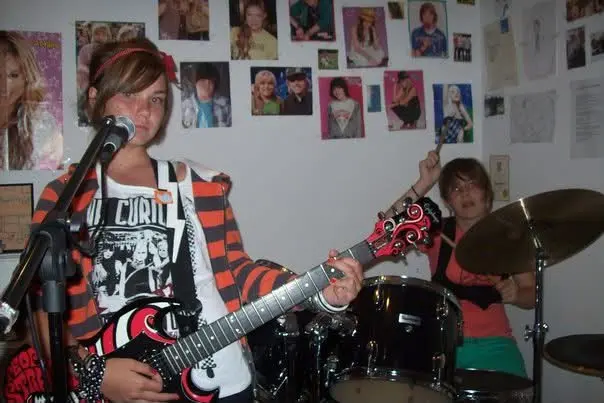
Sarah’s version starts in a restaurant. She was three, and there was a violinist playing table to table. “I begged my parents to let me learn,” she says, “and a year later, at the age of four, I picked up my first violin.” She went on to become the youngest violinist in the Johannesburg Symphony Orchestra, before switching to guitar and forming an all-female band called Lola and the Fireworks. “My dad liked to call us the Ace of Brace,” she says, “because we all had braces.”
Katryn came from a very musical family too, singing before she could really talk. “My mom has videos of me singing before I could speak,” she says, and it isn’t really a surprise once she explains where that came from. Her mother was a champion choir singer. Her grandmother is an opera singer. So is her aunt. Her grandparents met playing violin in an orchestra. “I’m a product of this whole family tree of musicians,” she says. Growing up, there was always a music room in the house, and she took up the violin herself as a child. But the moment that mattered most was a choir trip to Russia in her matric year, when her school choir went to the World Choir Games and won, in her words, “like every category we could.” She hadn’t taken music as a subject at school. “I felt like I had enough experience to study music and media after school.” she says. So she did.
The Long Way Round
None of them walked a straight line from that moment to Pressure Cooker Studios, and none of them set out to become a producer, a publisher or a marketer at the start. But every stop along the way turns out to explain something about how well each of them does the job now.
Katryn and Sarah, it turns out, were at Rhodes University at the same time, a year apart, without knowing each other well until years later. Katryn majored in Journalism and Media Studies with classical singing and Sound Technology, as a minor, then went back for an Honours in Musicology. “Nobody could advise me on where to work,” she says. “I was the only person on campus with my subject combination at the time.” So she made her own list: Universal Music, Sony Music, Virgin Music. Her first job out of university was at Universal Music Publishing. “So my plan worked,” she says.
Outside of Katryn’s current role at PCS, she still writes, sings and produces her own work. “My biggest passion is producing music,” she says, “creating music, singing and composing, all of that.”
Sarah’s music studies were always the supplementary subjects at Rhodes, Ethnomusicology and a course called Music, Health and the Brain, while her major was a Fine Arts Honours degree in photography, mixed media and digital arts. Her actual dream, in high school, was to become a touring band photographer. She job-shadowed Sean Brand, who photographed for MK and Fokofpolisiekar, and it was an advertising module inside her Fine Arts degree, of all things, that gave her the marketing bug. “I never formally studied marketing,” she says, “but those creative disciplines naturally led me in that direction.”
Astrid studied Sound and Music Technology, choosing a programme built around practice over the more classical, theory-driven route she’d have found elsewhere. “I went in wanting to be a songwriter,” she says. “I came out of varsity wanting to be a sound designer. And then very quickly found my path as a producer.”
How each of them actually arrived at our studios sounds like the kind of story you’d only believe if you heard it from the person it happened to. Katryn met the Pressure Cooker Studios team five years ago on a work trip while she was still at Universal, and remembers being impressed by the setup. When the Music Catalogue and Publishing Development role appeared on LinkedIn last year, she says, “it’s like it was made for me.” Sarah’s boyfriend applied for a Commercial Producer role at our studios first; the timing didn’t work out for him, but he showed her the studio and she couldn’t stop thinking about it. A few weeks later she saw the Digital Marketing job post. She had started to apply for other jobs she had seen. “None of them resonated with me as much as the role at Pressure Cooker Studios,” she says. And Astrid was invited, almost by accident, to a pizza night at the studio through her boyfriend, who worked there at the time. She now suspects it doubled as an informal job interview. Two days later, CEO and Founder James Matthes asked her to come in for a meeting. “The rest is history,” she says.
An Ear for It
This is where the three of them stop sounding like a coincidence and start sounding like a strategy.
Katryn spends her days doing what’s essentially matchmaking, finding the right piece of music for a client’s brief inside Pressure Music Catalogue (production music created by our studios) and its wider network. Her trained ear doesn’t just tell her what’s good, it tells her why a certain sound will land with a certain audience. “When I do music searches, I am able to focus on what the client wants, and also give them options of what I think might work,” she says. Clients often come back surprised. “I’ll often suggest different kinds of songs that they didn’t even ask for, and they’re like, oh no, this is great.”
Sarah’s route back to her academic training was almost accidental. She had assumed her ethnomusicology degree would never be useful again. Then Pressure Cooker Studios introduced her to ethnomusicologist Lucy Durán, and sitting in on those sessions with the team brought the whole subject rushing back. “That knowledge has shaped how I think about music, culture and even how we position ourselves within the industry,” she says. Her approach to marketing is built on immersion and collaboration: sitting in the studio, hearing how a composer talks about their own work before she ever writes a word about it. “I never want to speak on behalf of someone’s work,” she says. “I’d much rather sit down with the people who actually made it and tell the story through their perspective.”
For Astrid, having sat in the seat her creatives now sit in changes the texture of every conversation she has with them. She can answer a technical question about a delivery requirement or a sound design choice without deferring to someone else, which, she says, saves time and “makes people feel held” rather than like they are talking to a messenger. “It gives me a special way to connect with my team, separate to operational, but creatively,” she says. “I’m able to have the conversations creatively when I need to, and operationally when I need to. I see both sides of the coin.”
Why Are Women Underrepresented in Music Production?
There’s a harder conversation running underneath all three of these stories, and none of them dodge it. Women remain badly underrepresented on the production side of the music industry. In USC Annenberg’s 2026 Inclusion in the Recording Studio report, fewer than 6 percent of producers across the year-end Billboard Hot 100 were women. No woman has ever won the Grammy for Producer of the Year, Non-Classical, in the award’s history. And it was only in 2026 that a woman, PinkPantheress, won the BRIT Award for British Producer of the Year, the first in the award’s history and the youngest winner ever.
Katryn’s answer to that gap is practical. “Don’t listen to guys that look like they know what they’re doing,” she says. “This industry is full of performers that love attention. Listen to the behind-the-scenes people. They do the real work, and they know the most.”
Also: “Learn how to create your own copyright,” she tells women coming up in the industry, “so learn how to record or produce your own music.” Even recording your own vocals, she says, is a step in the right direction, because copyright is what keeps paying you long after a song is finished.
Sarah’s advice is less about the industry and more about the person walking into it. “Don’t feel like you need to fit a mold or become someone else to succeed,” she says. “Your perspective is valuable, and that’s exactly what you’ll bring to the industry.”
Astrid pushes back on the framing itself. “Remove the idea from your mind that this is a male-dominated industry,” she says. “Women are here in this industry, and not just in the wings supporting, but sitting at the head of tables. It’s what we choose to see, and what we choose to push for.” Don’t let the idea of a closed door, she says, stop you from walking through it.
Watch Katryn talk about Copyright and Royalties in this video:
Advice for Women Entering the Music Industry
Ask each of them what they would tell the kid who first picked up a violin, or stood in her nan’s living room reciting lines, or got off a plane from Russia with a suitcase full of medals, and the answers land somewhere between funny and genuinely moving.
Sarah wishes she had never put the violin down for the guitar. “Turns out a lot more people can play the guitar than the violin,” she says.
Katryn wishes she had been allowed to take music as an actual subject at school.
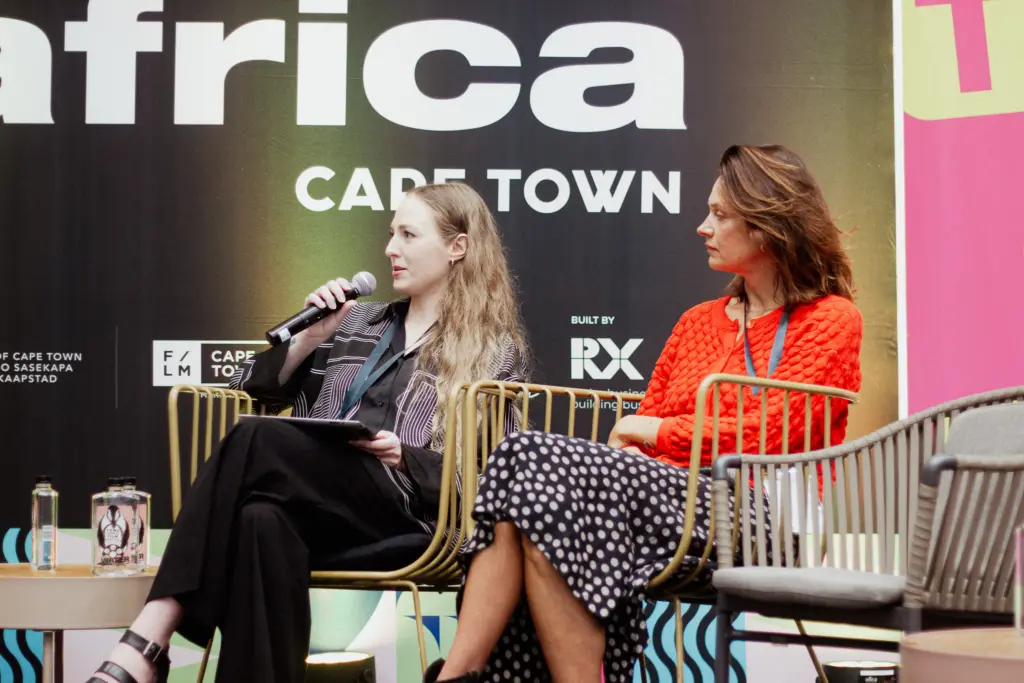
Astrid's advice is less about music and more about the years right before any of this made sense: don't rush a decision just because everyone around you seems to already know theirs. “You're allowed to take a beat,” she says.
Astrid Iverson
None of the three of them sat down at seventeen and planned to write the job description for Head of Production, or Music Catalogue and Publishing Development Lead, or Digital Marketing. But listen to how they talk about the work now, and it’s obvious that every one of those roles needed exactly what they already had: years spent paying close attention to music, and to what it does to the people who hear it.
Pressure Cooker Studios didn’t just find a producer, a publisher and a marketer. It found three people who were already fluent in the exact thing the whole company is built around, and gave each of them the room to use it.